Hand Block Printing Process: How Fabric Is Printed by Hand, Step by Step
By Chhap by Atharv, Jaipur · Updated 1 October 2026 · 5 min read · Hand Block Printing
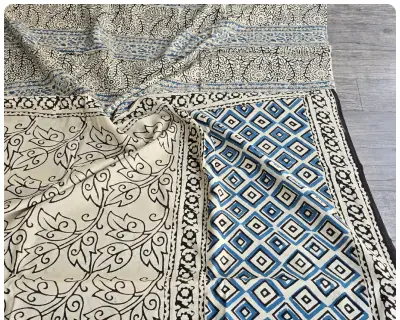
Quick answer: Hand block printing is a method of printing fabric by stamping it with hand-carved wooden blocks dipped in colour or resist paste. The process has seven main stages: designing the motif, carving the blocks, preparing the fabric, preparing colours, printing on a padded table, fixing the colours, and washing and drying the finished cloth.
Every hand block printed saree, suit or bedsheet passes through many hands before it reaches you. In and around Jaipur, especially in the printing centres of Bagru and Sanganer, this work is still done much as it has been for generations, with carved wooden blocks, long printing tables and plenty of sun and water.
This guide walks through the process in order, so you can understand what goes into the fabric and why it looks the way it does.
What Is Hand Block Printing?
Hand block printing is the technique of transferring a design onto fabric using carved wooden blocks. A printer dips the block in colour, a mordant or a resist paste, then presses it onto the cloth by hand. The impression is repeated across the fabric to build up the full pattern, with a separate block for each colour or element.
Step 1: Creating the Design
Every print starts as a drawing. Designers plan the motif, how it repeats and how many colours it needs. Traditional Rajasthani designs draw on flowers, leaves, vines, birds and geometric forms. A multi-colour design is split into separate layers, one for each block.
Step 2: Carving the Wooden Blocks
Skilled block carvers transfer the design onto seasoned hardwood, commonly teak or sheesham, and carve it by hand using fine chisels. A typical design uses:
- An outline block (often called rekh), which prints the main lines.
- Filler blocks (such as datta and gad), which add colour inside the outline.
Blocks are usually soaked in oil for some days before use to prevent cracking. Carving one complex block can take days, which is one reason custom designs take longer to produce.
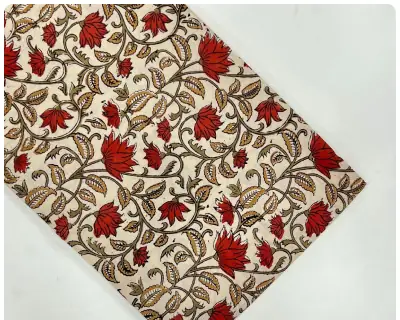 Outline and filler blocks are printed one after another to build the design.
Step 3: Preparing the Fabric
Raw cotton contains starch and impurities that stop colours from absorbing evenly. The fabric is washed and soaked, sometimes over several days, then dried. In Bagru-style printing, the cloth is also treated with harda (myrobalan) solution, which gives a cream-yellow base and helps certain colours develop. Read more in our guide to natural dyes in hand block printing.
Step 4: Preparing Colours and Pastes
Depending on the style, printers prepare:
- Direct colours, applied straight onto the cloth.
- Mordant pastes, which later react with a dye bath to produce colour.
- Resist pastes, such as Dabu mud, which block dye from reaching parts of the cloth.
Colour is spread onto a tray lined with a soft base, so the block picks up an even layer each time.
Step 5: Printing on the Table
The fabric is pinned flat on a long, padded printing table. The printer dips the block, positions it carefully and presses it down, often striking the back of the block with the palm to get a clean impression. Then they move along the cloth, matching each repeat to the last.
For multi-colour designs, the outline is printed first and allowed to dry. Filler colours follow, each with its own block. Registration, lining up each layer, depends entirely on the printer's eye and experience. Small offsets are normal and are one way to recognise genuine hand block print.
Step 6: Fixing the Colours
Printed fabric is dried, traditionally in the sun. Depending on the colours used, it may then be steamed, boiled in a dye bath (for example with alizarin to develop reds on mordant-printed areas) or dipped in an indigo vat after resist printing. This stage makes colours more permanent.
Step 7: Washing, Drying and Finishing
The cloth is washed to remove excess colour, gum or resist paste, then dried in open grounds. Finally it is checked, ironed, cut and either sold as fabric or stitched into sarees, suits, kurtis, bedsheets and other products.
The Three Main Block Printing Techniques
| Technique | How it works | Example |
|---|
| Direct printing | Colour or mordant is printed straight onto fabric. | Sanganeri florals, Bagru black-and-red |
| Resist printing | A paste blocks dye, then the fabric is dyed. | Dabu mud-resist indigo prints |
| Discharge printing | A chemical paste removes colour from pre-dyed fabric to create the pattern. | Light motifs on dark grounds |
For a tour of regional styles, see different types of block printing in India.
Why the Process Takes Time
A single hand block printed saree may pass through washing, treatment, several rounds of printing, drying, fixing and final washing. Weather plays a part too, since sun-drying slows during monsoon. This slow, skilled work is why hand block print costs more than machine printing, and why each piece carries small, unique variations.
Where Hand Block Printing Is Done in Rajasthan
Jaipur is surrounded by well-known printing centres. Sanganer is known for fine florals on light grounds, and Bagru for earthy colours and Dabu resist. Both are registered Geographical Indications. Compare them in our guide to Bagru vs Sanganeri print, or read about the craft's history in the art of hand block printing.
Chhap by Atharv, Jaipur, offers hand block printed cotton sarees, fabric, salwar suits and home furnishings. For bulk or custom work, contact us.
Frequently Asked Questions
What wood is used for hand block printing blocks?
Blocks are traditionally carved from seasoned hardwoods such as teak or sheesham, which hold fine detail and withstand repeated use.
How many blocks are needed for one design?
Usually one block per colour or element. A simple design may use one or two blocks, while a detailed multi-colour design can need several, including an outline block and filler blocks.
How long does hand block printing take?
It depends on the design, colours and weather. Preparing fabric, printing several layers, fixing colours and washing can take days to weeks for a batch.
What is the difference between direct and resist block printing?
In direct printing, colour is stamped onto the fabric. In resist printing, a paste such as Dabu mud is stamped first to block dye, then the fabric is dyed, leaving the pattern lighter.
Is hand block printing eco-friendly?
Hand block printing uses little electricity, but its environmental impact depends on the dyes, chemicals and water management used. Natural-dye processes are generally gentler than heavy synthetic processes.